
Is Interior Design really important in healthcare settings
Is Interior Design really important in healthcare settings
As we move closer into 2020, the demand for quality healthcare interiors has increased significantly. As more and more research is emerging that shows the look and feel of care environments impacts on patient/resident wellbeing.
Good design can reduce anxiety and stress using color theory, or simply by creating a more welcoming space. It can also encourage socialization – which then reduces loneliness – by creating communal spaces people want to spend time in.
Our experienced interior designers have handled everything from creating mood boards and choosing color schemes and flooring, to specifying medical equipment and furniture for refurbishments and new builds. So, we really have seen it all when it comes to designing for care environments!
Here are the top reason why;

Evans Building Main Clinic
Design unity
Design unity refers to a facility that maintains a consistent look and feel among its separate departments of sectors. In a time when most healthcare construction projects are expansions or renovations, maintaining continuity across “old” and “new” portions of healthcare facilities is critical.
Achieving this cohesion can be difficult in healthcare facilities because they feature so many different spaces, from patient rooms and labs to lobbies, offices and maintenance areas. But it’s important to remember the overall image of your project. More than just walls and a roof, your healthcare facility represents your brand. Do your interior design decisions reflect your cohesive vision?

Seattle Children’s Hospital
Art can support Good Outcomes
Often front line care staff making a case for art in their ward or unit face familiar arguments against having art in care: it is a luxury that there is neither time nor money for; infection control forbids it; there isn’t enough evidence to support it, according to an article on the Nursing Times website. But studies demonstrating the health benefits of art are becoming more common.
Multiple studies found that for both patients and staff, art relieves anxiety, stress and depression. They also found that art improves staff morale and retention. Studies across a range of industries also reveal that because the built environment has a profound impact on psychological well-being, it also affects the physical well-being.
Plus, art improves patient recovery time. A study in 2003 found that patients’ length of stay on a trauma ward was one day shorter on average when art was part of their care. Art also helps to manage pain. Several studies have found that patients’ pain levels are reduced by art.
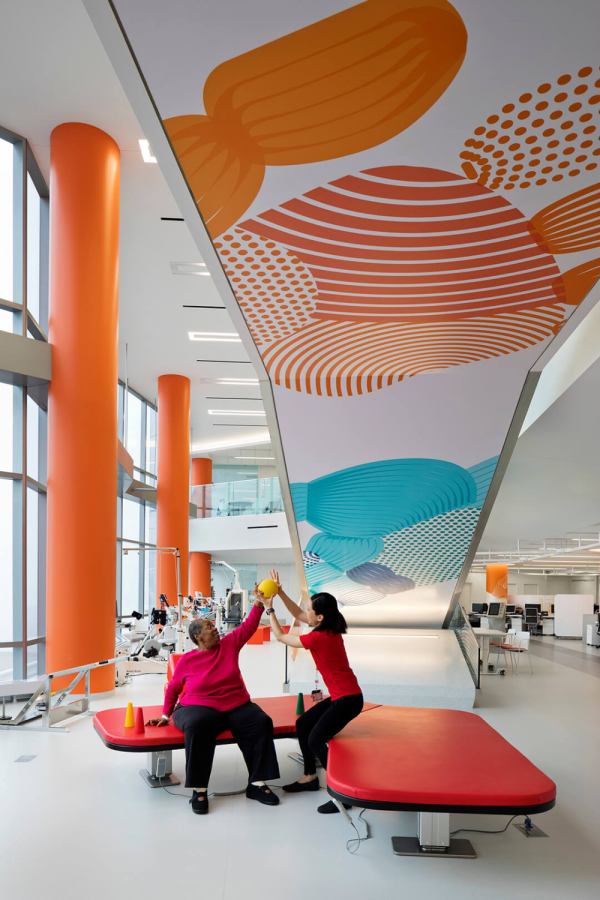
Chicago hospital, Rehab Area
Designing for well being in long term, behavioral care
Every detail from a long term or behavioral care facility’s lighting to its color palette can directly influence the quality and effectiveness of patient care, according to an article on The REMI Network website. One of the key objectives in residential healthcare is to promote wellness. This includes social, spiritual, emotional and intellectual well-being. There is an increasing trend toward the use of brighter, more saturated and optimistic color palettes.
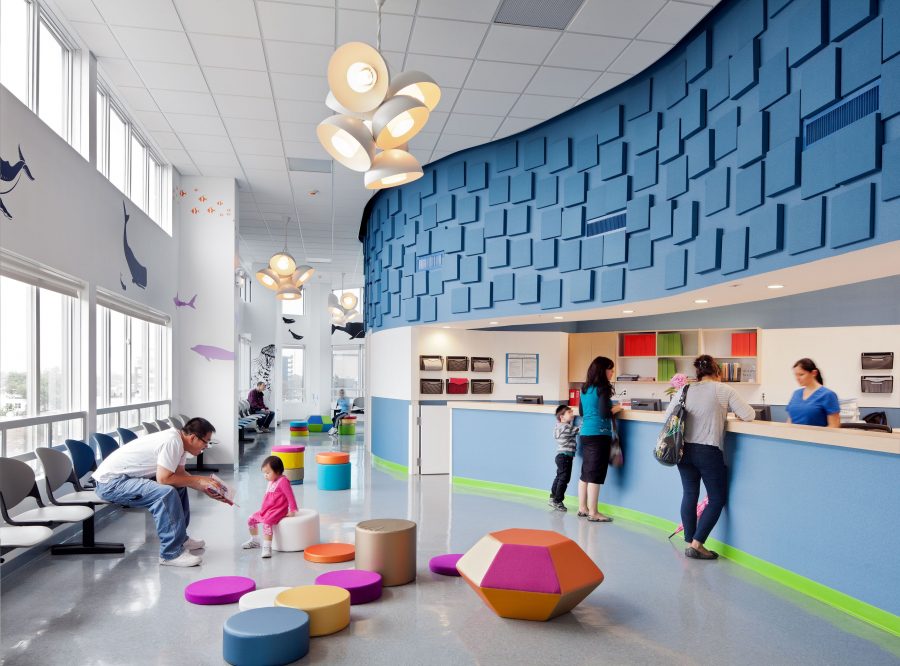
Architizer Maimonides Medical Center Department of Pediatrics
Impact of design
Today, healthcare facilities are called to pay special attention to the design of their interior spaces and the overall brand experience of guests. First impressions garnered from a carefully considered design and a warm and inviting environment matter. Ultimately, these first impressions have the potential to bring comfort and security to all who enter your doors.
Similar to the hospitality and retail industries, consumers respond well to recognizable, professional, and consistent brands. Interestingly, a report from the Robert Wood Johnson Foundation, a philanthropic organization dedicated to healthcare, found a direct link between patient health and quality of care and the way a hospital is designed. It found that even small changes in design elements such as room layouts, wall color and flooring choices improved both patient and staff moods and physiological states contributing to their overall well being.
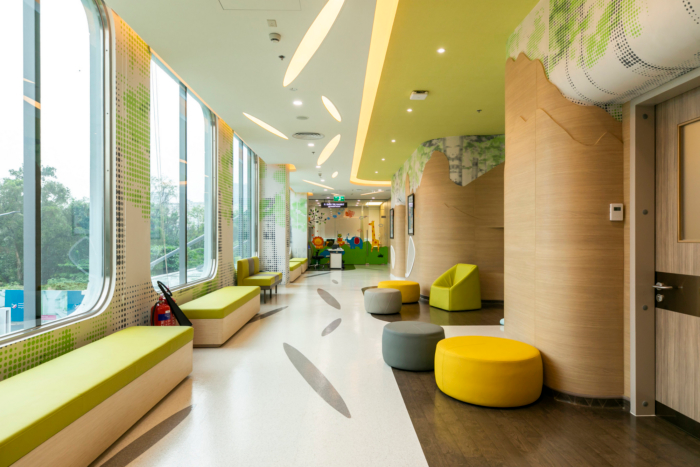
American International Hospital
Good design can reduce stress of visiting the hospital
As healthcare facilities grow in complexity and scale, good design can reduce stress of visiting the hospital, according to an article on the Daily Journal of Commerce website. For instance, way finding helps people feel more comfortable.
It’s safe the assume that many visitors to these medical facilities already have a certain amount of stress, so it’s wise to approach our design solutions with a great amount of delicacy, in terms of the visitor experience. Understanding a client’s needs and close communication with architectural firms early on result in design solutions that are both complex and delicate — all of which make the user feel at ease with every visit.