
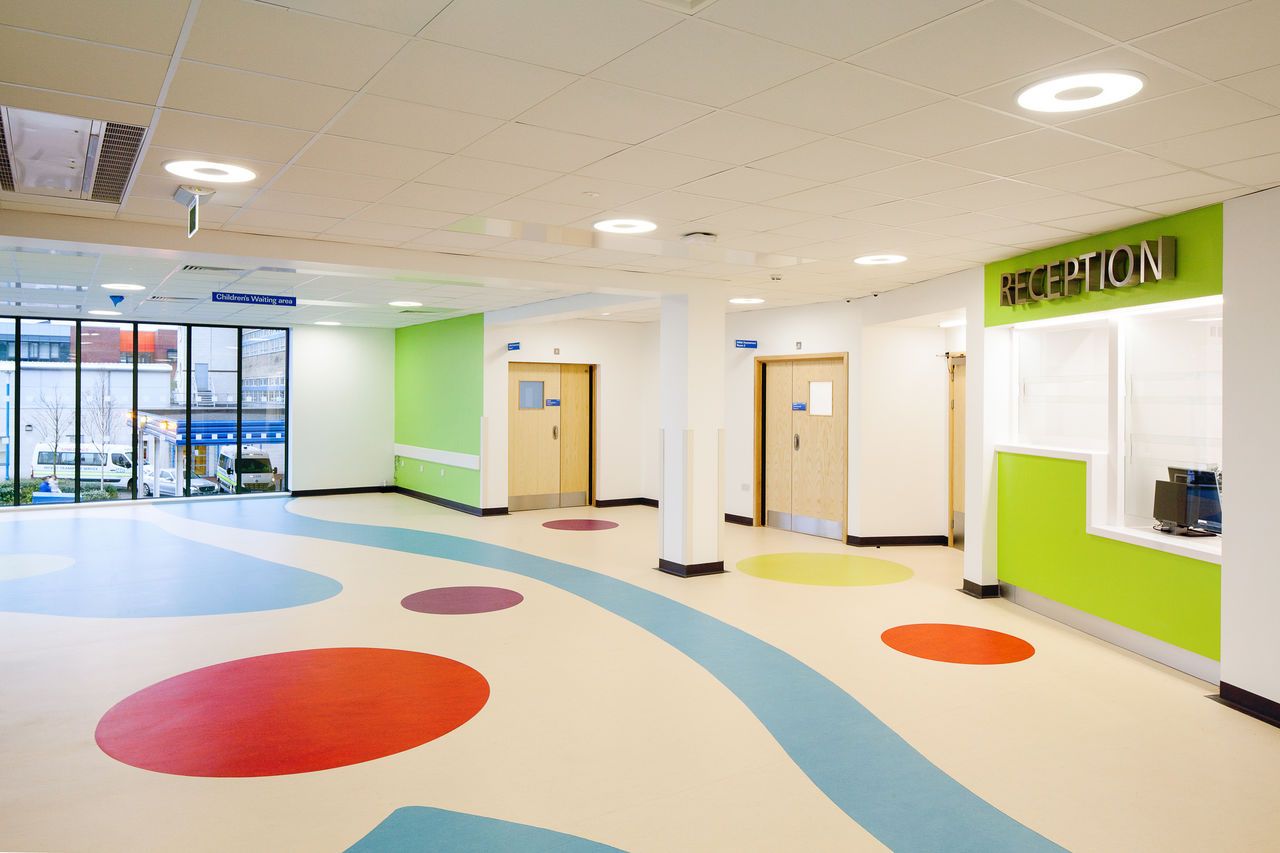
What do hospitals and interior design have in common?
Both strive to transform people’s lives, uplift their spirits and improve their quality of life. Both aim to make people’s lives more pleasant and comfortable. When we hear the word ‘hospital’, what we first conjure up in our mind has always been images of hospital beds, drips, healthcare workforce and medications. And when we hear the word ‘interior design’, we always think about aesthetically pleasing space. Aesthetically pleasing space has always worked wonders in making us feel more welcomed, more relaxed and help us enhance our creativity and productivity.
“A thing of beauty is a joy forever.” – John Keats
Comfort, Safety and Technology are the hallmarks of our healthcare interior designs. Keeping these in mind, our leading-edge designs prioritize the needs of the patients, healthcare professionals and visitors by focusing on the following interior design trends:
Use of Advanced Technology
We include the use of advanced technology in our designs to provide the patients with more options for care, improve healthcare workers’ productivity and efficiency as well as boost day-to-day workflow at the healthcare facility. Some of the technologies that we integrate in our designs, include the following:
The use of Virtual Reality (VR) technology provides information about the healthcare facility’s floor plans as patients are able to walk through the 3D models created via the VR technology.
Digital Kiosks make the process of registering and checking in patients effortless, trouble-free and more efficient. Touch screen monitors available at the healthcare facility will provide updated information, such as waiting time information, to patients as soon as they are registered.
Telemedicine allows health professionals to monitor patients’ health remotely and facilitates doctor-to-patient video consultations.
Our healthcare facility designs also include mobile computer workstations that can be moved from location to location and accelerate access to important information, such as patients’ data.
Charging stations that are accessible throughout the healthcare facility make it possible for patrons and healthcare workforce to charge their telephone and gadgets.
Creation of Multipurpose Spaces
When designing flexible spaces at your healthcare facility, we take into account the following features that enable you to maximize space for nursing stations, patient treatment or administrative duties:
Centralized Workstations not only help nurses to care for patients more efficiently, they also boost the nurses’ esprit de corps. Workstations that are placed in central locations allow nurses to be closer to their patients’ rooms and indirectly, make their workflow more structured and systematic. Locating these workstations close to the consultation areas also provides better opportunities for the nurses to discuss patient treatment and care with other health professionals.
Prefabricated Walls or Partitions offer more flexibility at your healthcare facility. You can re-size exam areas, treatment rooms or provide privacy to patients instantly with wheeled partitions compared to traditional walls.
Modular Rail Storage Systems, especially those that are wall-mounted are great and practical at any facilities. They are flexible and easy to set up.
Shell Spaces serve as temporary areas for future expansion. These soft spaces are easily converted into hard spaces and allow you to accommodate additional medical equipment, patient exam rooms or even a pharmacy when the need arises.
Use of Infection-Control Materials
As mentioned earlier, we take safety seriously in our healthcare designs. We believe that the use of infection-control features can help limit the spread of infection and amplify the safety of our patients, visitors, and health workforce. To defend against the spread of infection, antimicrobial coatings on finishes of hard surfaces and lighting are often preferred in our designs.
Copper coating is not only pleasing to the eye and exudes warmth to any spaces, it is also naturally antimicrobial. Copper coating is used to destroy a wide range of microorganisms, including ineffective agents such as E. coli, the influenza A virus and many others.
Our design also includes the use of photo-active pigments. These pigments which quash microbes when they are exposed to natural or artificial UV rays are used to coat steel, glass and ceramic surfaces.
Installation of indigo LED lighting aids in destroying bacteria. In our healthcare facility designs, we utilize LED lighting to slow the spread of bacteria in operating theaters and treatment rooms.